Heavy handed PR – Duke Nukem Forever

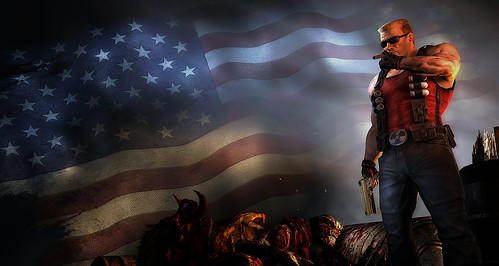
Duke Nukem Forever for PS3

This is a flavour of heavy-handed PR-ing that I normally attribute to former newsroom editors rather than long-time video games comms pros, but I guess when you’re PR-ing the ‘longest’ if not ‘most heavily anticipated’ video game of all time (“FOREVER is a reference to how long its been in development) the pressure might be on:

Ars Technica tells the full story of how a blacklist threat was issued for negative reviewers of the new Duke Nuke’m game.

"Too many went too far with their reviews…we are reviewing who gets games next time and who doesn’t based on today’s venom," the company tweeted. "Bad scores are fine. Venom filled reviews…that’s completely different," another tweet read.

I guess this is one video game you have to be careful with, before, as Duke might put it, you "rip off its head and s**t down its neck." –> although in this case, the Duke turned on his own, with 2k Games firing the PR in question fairly swiftly.

My heart goes out to the guy, though, if his apologies (see the Ars Technica piece) were genuine. It can be heart-wrenching if a project you’ve put a lot of soul into gets universally panned. However; I’m a little dubious at how much the PR can have contributed… after all, the job of PR-ing one of the biggest names in gaming wouldn’t be as emotionally involved as, say, developing it in the first place….

Terry Pratchett – Choosing to die

pratchett

I’m not much of a documentary person. I generally get enough of reality… well, in reality, and enough non-fiction on my various and well-dispersed readings on the Internet. My leisure time entertainment tends to be somewhat more… fantastical, as regular readers will have noted.

Yesterday, I read a write-up on the BBC blog of the documentary “Choosing to die” – about Terry Pratchett’s investigations of assisted suicide.

Now, Sir Terry Pratchett is not just one of the best-loved fantasy authors in the world, he’s also the man, alongside Douglas Adams, Arthur C Clarke, PG Wodehouse and Isaac Asimov, to provide me with the reading material that weaned me off a steady diet of comics and books-on-tape into the realm of the written word. His humour and love of absurd metaphor has been influencing me since I was 11 years old. One of the first ‘adult’ works of fiction I read was a dog-eared, mis-printed copy of ‘Pyramids’ my brother gave me, and Sir Terry’s latest book, Snuff, is on my Amazon wishlist so I can buy it the second its published.

And so my curiosity was engaged and we iPlayered it last night.

It’s an amazingly sensitive and well crafted piece of filmmaking. Apparently honest and without emotional manipulation (the content is gut wrenching enough without the need for that, I imagine), amazing access, incredible people being unbelievably open about what must have been a remarkably difficult process.

The programme follows Terry Pratchett’s investigations of the practicalities of assisted suicide – illegal in the UK and only manageable for British citizens in Switzerland (despite the fact it is legal elsewhere in Europe, non-locals have to go to Switzerland). He looks in particular at  the not-for-profit organisation Dignitas and interacts with two British families going through the process – an MS sufferer and a man suffering from Motor Neurone Diseases. Both in tremendous pain at the end of their tether.

The ordinariness of the proceedings at Dignitas is jaw-dropping. Cups of tea (the secretary general of Dignitas describes himself as a [sic] tea-o-logian), a peaceful garden (in an industrial estate as that’s where the gov’t requires them to be), chats with the empathetic Dignitas workers, the acceptance of the families of the two people going through the process. It was evident that – for those families at least – they’d experienced enough of life that there was some certainty about going through the process.

Terry remains set about his desire to choose a dignified death for himself when his Alzheimer’s – diagnosed three or so years ago – has progressed to the point where he can no longer pursue his passion, his writing. He picks out two critical limitations for himself – for Alzheimer’s patients, once the disease has progressed too far – it may not be possible to make the choice of assisted suicide for yourself. And if you do make that choice earlier – it takes tremendous determination to carry it through. The Dignitas Secretary General observed that the vast majority of people that make contact with Dignitas do it once to get on the books and then don’t get in contact again – the knowledge that the option is there is enough to give many the strength to go on.

I don’t have a well-formulated view on the issue. I can see the rationale for people in vast amounts of pain and suffering, for whom their quality of life has deteriorated to such a point where they just can’t bear to go on. I struggle a little more with the people, as Dignitas puts it, who are just “weary of living,” who they would also support through the process as part of their fundamental view that all people have a right to ‘self-determination.’ But I can understand where Terry is coming from – when he has to go, if one outcome is with his brain addled and his life completely dependent on others, he’d rather choose the time – and preferably the place. He’d like to see it legal in the UK so the end isn’t contingent on a blue house on an industrial estate in Zurich.

The show’s still on iPlayer for those curious. It is heart wrenching and well made, thought provoking and saddening, and worth a watch, despite the debate it’s kicking up and the complaints being submitted.

Postscript. I’ve just noticed the extent of the furore over this programme. It’s not my intent to get drawn into the debate of whether assisted dying is a good thing or not. For what it’s worth, I wasn’t ‘converted’ by the programme and didn’t really consider its agenda – if anything, to me it underlined the importance of the choice of the individual – and I didn’t feel that the programme trivialised, oversimplified or proselytised a specific choice despite Terry’s own agenda. To me it was clear this is a – difficult – personal journey for him.

One of the particularly inspiring moments was Terry’s visit to a hospice where he met someone who had chosen to live with his disease. But that was the impact it had on me – I’m aware there are other perspectives on it. I just found it to be an interesting, thought-provoking and well-made piece of television, and yet another reason I’m glad the BBC exists…

Looking at low emissions cars

Volkswagen Golf BlueMotion

Hybrids have a bad rep. They’re inexplicably shaped like dinosaur eggs – closer to a Jetsons view of what a modern car should look like than any actual designers, one would assume – famed for sluggish performance, plagued by technology issues and challenged on their supply chain eco-credentials – after all, if the components have travelled the world seven times over to allow the car to be assembled in the first place, then how much difference to the environment does the ‘hybrid’ make?

This review sums it up:

Eco-friendly cars are often grim, hair-shirted things that you suffer as penance for your emissions, even though they pump out less CO2 than their standard brethren.

Which is why I think its fantastic – although depressingly late to market – that there’s a new wave of environmentally friendly cars rolling off production lines around the world – whether its ‘Greenline’ (Skoda), ‘Bluemotion’ (VW) or ‘EfficientDynamics’ (BMW), the (German, anyway) manufacturers have cottoned onto this eco-friendly thing and are rapidly revising their product line. Since 2007 or so these cars have been entering the market and whilst – in the used car market at least – they still command a premium over their standard rivals, they do provide a number of key benefits thanks to a number of cool bits of technology.

The benefits:

  1. Ludicrous mileage – over 80 MPG in some cases, which will top out older hybrids
  2. Tax-free, mostly, thanks to low emissions
  3. Some of the cars have even lower emissions than many hybrids
  4. (Relatively) normal handling – the car’s body mass index hasn’t been skewed by a heavy battery pack

The tech that gives it this awesome mileage:

  1. Stop/start tech. The engine switches off when the car rolls to a halt (say at a traffic light). For urban driving, this makes a big difference.
  2. Regenerative braking. The kinetic energy lost when the car brakes is captured, generally in the car battery, for later use.
  3. Sill extensions & other aerodynamic tweaks – help seal the car and reduce drag
  4. Engine refinements – high torque diesel, usually
  5. Gear shift indicators – to help you drive more ecofficiently

I’m looking for a possible replacement for Horse (our ageing 68 BHP Skoda Fabia) and am very tempted by one of these cars – specifically the Golf in the above review – but they cost much money. Anyone have any advice?

T-shirt mash-ups, @Qwertee_com review

800px-Wide-Main-Image_RoyalI discovered Qwertee the other day – new, limited edition t-shirt designs daily. The Doctor Who / Winnie the Pooh mash-up got me to spring for an impulse buy and the t-shirt turned up a few days ago.

It’s not bad. I mean, it’s not fruit of the loom grade cotton, and I’m not sure how it’ll hold up to the washing machine, but the print looks great and the t-shirt is both comfortable and fits well – although slightly large  for its size .

I can’t figure out a way to subscribe via RSS to the daily site updates, though, which seems a tactical error. Am I missing something, nice people at Qwertee?

Other designs of note – Malvin and Hobbes, Jumping Jack Flash, Jedi to the Future, Muttley Crew, Sesame Street Fighter and another Firefly favourite – Leaf on the wind.

If it holds up to the laundry I’m likely to become a regular customer…

Waterbabies – entrepreneurship in action

waterbabiesWe’re doing, as I may have mentioned, the ludicrously priced but lots of fun Waterbabies course at the moment. At our introductory session the manager for the Basingstoke branch was trying to convey how much passion people have for Waterbabies – by explaining how he and his wife both chucked their jobs to take it on full time.

To me, the message was: this is one awesome business opportunity. A little arithmetic confirms it: the courses cost about £14 per 30 minute session per baby, there are about 6 babies per session, and there must be at least 10-12 sessions per day at the weekend. Simple arithmetic – one branch could be taking £2000+ per weekend, plus the weekday sessions. That’s one heckuva business model, given the franchise nature of the business.

They give away loads of branded stuff – swimming suits (ostensibly to protect the pool, but also to promote Waterbabies when parents take their little ones elsewhere) and carshades (which parents will use when they take their kids out to places where other parents and kids go). Cunning, low-cost marketing.

So they’re clever chappies. Emily is beginning to enjoy it so we’ll have to give a second term some proper thought – although I must confess her only no-cry session was when Daddy wasn’t in charge of looking after her in the pool :-(.

H2G2 continued

douglas adams

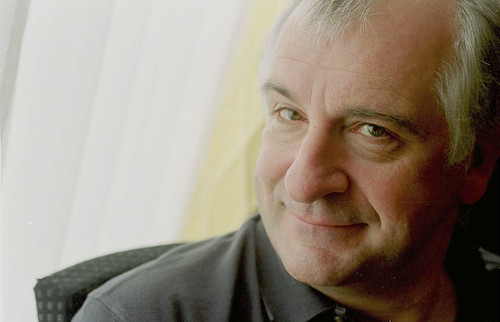
Douglas Adams was something of a hero of ours – I’ve always loved his books, and my brother (and his schoolmate James) even adapted one of them – Dirk Gently’s Holistic Detective Agency – into a play that still gets performed around the world.

So its with some trepidation that I’ve picked up his estate’s authorised sequel to the Hitchhiker’s guide series – ‘And another thing, part six of three’, (ironically not available on Kindle) by Irish children’s writer Eoin Colfer (famous for Artemis Fowl et al).

I’m working my way through it slowly and not too sure what to make of it yet; full thoughts to follow in the next week or two. I’m a fan of Eoin but I’m not sure this is a mantle I’d have wanted to take up. Unlike The Wheel of Time, people were mostly happy with the H2G2 canon – it didn’t need any further storytelling. But – I’m not done yet – so will reserve judgement.

One immediate thing that I’m not sure whether to like or not – Eoin quotes Tenacious D on the opening page of the book. Now, I love the D and Douglas probably would have thought they were OK… but it doesn’t feel right for the H2G2 books. Maybe for Zaphod, but Arthur? He’s more of a Radio 3 sort of guy. And this was never a series of books about Zaphod…

How to be a prolific blogger

People have asked me how I’m being so prolific on the blog. Well, other than the fact I have 2 hours on a train most days and have the time to tap out thoughts, here’s what I’m doing – three broadly practical and three psychological things:

  1. Making quick notes on Evernote every time a post idea occurs – on a PC, Mac or iPhone
  2. Capturing and clipping links in both Evernote and Google Reader
  3. Blogging in plain text in Evernote (on a Mac), then publishing using Windows Live Writer, pulling shareable images from Flickr or elsewhere to illustrate the stories and adding additional links

Psych

  1. Being more curious in conversations with colleagues, friends and strangers
  2. Picking and choosing which posts I want to build out and research in full as I go
  3. Forcing myself to write as often as I can so I don’t build up any kind of weird blogging self-consciousness

The readership of the blog has gone up substantially since last December – averaging just over 200 visits a day – and I’m enjoying the occasional interaction in the comments as well as the increased store of knowledge I’m getting on all things. Tony Buzan was right – adults aren’t curious enough – but having a blog to write seems to fuel that thirst for knowledge, and maybe I’ll be able to keep up with my daughter…

Not a good photographer

Not My Nikon D80 We wheeled out the SLR this weekend for some family snaps, and to capture Emily’s enjoyment of Waterbabies. I loved capturing snaps; the ridiculously quick exposure times make it much easier for me – a stumbling amateur photographer – to capture those key moments as they happen.

But I totally lack the mindset of a photographer. I rush to frame the shots, struggle even to obey the simple ‘rule of thirds‘, invariably get the lighting wrong, and take ten useless photographs for every half-passable one. I’ve put this down in the past to being the sort of person that’d rather be in photos than take them…

I’m a bit better with my iPhone. The primitive capabilities of the iPhone’s camera are easier to learn your way around, and inevitably I work my around its limitations where I can.

Maybe I’m just making excuses for not being able to work out the myriad functions of the D80… I should probably go on a course. How did you get better at taking photos?

Fantasy brings bad things from the North

compass Whilst watching Game of Thrones, and having recently read Joe Abercrombie’s First Law series, a conversation with Amanda led to the observation that a lot of bad things seem to come from the North. Mr Martin’s Whitewalkers, Joe Abercrombie’s slavering Northmen, the hordes of the Shayol Ghul in Jordan’s Wheel of Time universe, right the way back to Mount Doom in Mordor on Tolkien’s Middle Earth.

The distant South is cold, too. What is it about fantasy writers that gives the North such a bad rep? Is this our North American/US-centric world view? Or just prejudice against the Scots/Canadians?

The Duke at 90–BBC interview

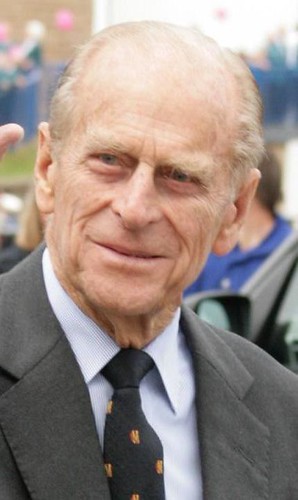
HRH Prince Phillip I’ve never been massively interested in the Royal Family as a matter of course, but have become a bit more curious about them given recent happenings (Royal Wedding, King’s Speech etc).

The Duke at 90 was a brave bit of programming by the BBC. Sending Fiona Bruce – not quite your typical royal correspondent – to interview the Duke on the occasion of his 90th birthday – was risky. And I’m not sure it quite paid off; Fiona’s interview with the Duke of Edinburgh, whilst it does convey some key qualities about the  man, doesn’t successfully uncover a great deal about the Prince’s life that isn’t told through the historical documentary drawn from the BBC archives and some researcher’s hard work (which is a lovely bit of television, interview notwithstanding). In the interview itself, he comes across as cantankerous, impatient, and anything but loquacious. Poor Fiona! That said, he’s hardly as grumpy as you’d expect a non-retired 90-year-old man to be!

Some of the key qualities of the man did come across in abundance – his no-nonsense, uncomplaining (except about having to do interviews), get-things-done attitude; the manner and mechanisms by which he carved himself out a (non-constitutional) role in the monarchy, his love and loyalty to his wife… His much reported "racism" seems to have been little more than a mis-interpreted, dry, dated sense of humour. So perhaps it was in what Fiona Bruce didn’t make him say, as much as what she did, that made it an interesting and watchable bit of television (sidebar: watched a Fawlty Towers the other day in which an extra calls Manuel a "dago twit" – this sort of casual racism or national stereotyping was a much greater characteristic of Britain in past decades than it is today…).

I met the Duke once, briefly, on a trip he made to my school. I didn’t have any time with him (a handshake) but did get an impression of him as a man of incredible presence.

I’ll need to brush up on my Royal Family general knowledge, though, if I’m to become a British citizen at any point. I wouldn’t recognise the Earl of Wessex if he was selling me a takeaway.

Armand David's personal weblog: dadhood, technology, running, media, food, stuff and nonsense.