Tag Archives: Technology

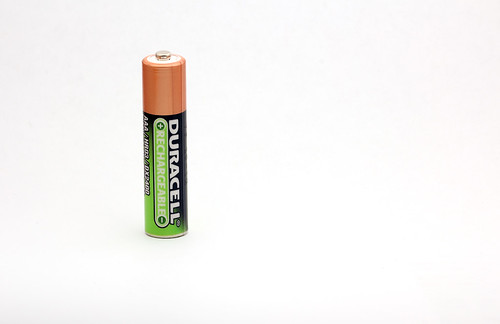
Are rechargeable batteries worth the money?

DIY Light Tent

I should probably have done this before I bought the rechargeables, but here’s some quick maths working out the ROI on some rechargeable batteries – are they worth investing in for your house?

8 batteries and charger  cost £17 – thanks Duracell / Amazon.

1 pack of four regular batteries costs, let’s say, £1.50 and I’d use one per month (principally in a baby monitor!).

Let’s say I have to recharge twice as often as I’d replace the batteries – twice a month – and that they would last for two years, after which I’d have to spend another £9 on fresh batteries. So let’s work out the total cost of ownership over 2 years for a comparison.

How much does it cost to charge the batteries? Well, this site gives me the maths. I can’t find specific power usage for my charger  but let’s assume its the same and do the maths on that basis.

First, EON’s local electricity cost for my postcode is about 23.3p per kwh. Actually, it’s slightly less as I get direct debit and dual fuel discounts of around 8%, but let’s call it that.

Then – I apply the maths – 9 hour charge * 300ma * 12v = 32.4 watt hours (from the Protog website above)

32.4 / 1000 * 23p = 0.74p

x2 (as assume 50% efficiency) = 1.49p per charge

In two years, that would be 52 charges minimum = around 77p.

TCO in two years of the charger, batteries and charging – £17.77. And assuming the charger lasts longer… the next two years would cost approx £9.77. Of course, I’m not modelling for energy price increases (folly!).

Buying the 24x packs of 4 AA batteries I’d otherwise need? Around £30 at least, if I buy in bulk, and more if you go on the £1.50 per pack price. So it’s about 100% cheaper to buy rechargeables (not to mention environmental impact, other types of batteries and devices etc).

In summary – good household ROI!

I’m not sure about all my assumptions, though – is the assumption of rechargeable battery life fair? Is the assumption of 48 recharges reasonable before performance degradation kicks in? Is the assumption on charging costs accurate? Is the assumption of the power capacity right, such that they’ll last us a couple of weeks of typical usage?

Interesting exercise – much as I’d like it if all consumerism could be evaluated for returns, I can already hear my wife making her geek noise at me….

Should I wait for an iPhone 5 to renew my contract?

iPhone 5 PreviewNo! Renew your contract now if you’re out of the contract term! Negotiate a rate on your tariff equivalent to the iPhone subsidy you were hoping for – and start it now so you can work off some of those tediously long contracts ahead of the phone’s release.

Then, when you buy an iPhone5 outright whenever they come out, you’ll already be achieving the savings you needed to afford it via your mobile tariff reduction, and you’ll be ‘locked in’ for a shorter period.

Inspired?? I think so! Would try it myself, but am tempted by the ludicrously cheap monthly rolling 3 SIM only iPhone tariff – at £15 a month for enough minutes, 1GB internet access and 3000 text messages, I’m unlikely to top it irrespective of my negotiations with O2, especially now they think they’re the top mobile broadband provider in the UK… Just need to do the maths on the subsidy…

A week with the HTC Sensation

HTC Sensation: A1 bringt erstes Dual Core Smartphone von HTC =A week after giving up on the the Blackberry Torch as a clunky not-quite-there-phone, my brother-in-law has given up on the dual-core Android 2.3 megadevice, the HTC Sensation. He much preferred it to the Torch, but, as I suspected it might, the iPhone has ruined him for even marginally less intuitive mobile devices, and the freedom of choice on how to customise the platform was more than he wanted. His thoughts below; which chime neatly with my own thoughts on the Android platform. Powerful, but not ready yet.

Bil’s review:

So, the htc phone…. Well, perhaps the reason I’m writing this note on the iPhone probably says it all……!

Sure the bigger screen, amazing camera & great graphics will win you over, plus the speaker phone is also strong but as an everyday practical device there are still too many minor flaws. Writing a simple note, a reminder, a calendar entry all involve too much ‘faff’. It’s just slightly tedious, your thumb precision is really tested (ok, sure you can rotate the phone for a wider grasp but that requires readjustment and hassle). Perhaps the htc is overengineered? Flexible gingerbread platforms and custom home pages allow you to create and personalise the phone to fit your preference. Fine. But then what?? If it doesn’t do what you want it to do what good is a sexy layout?

iPhone 5 or whatever it’s going to be labelled, will bring something new to the Market…. again, so i’ve decided go reacquaint myself with the iPhone platform ahead of what’s round the corner.

So, here’s to Apple and their product, it’s good in all areas rather than being spectacular in some and letting itself down in others…..

Sent from my APPLE mobile device

Should I buy an iPad 2 for my commute?

This isn’t something I’m considering, needless to say, but a question I was asked by an old friend, who predominantly uses Google Apps to run his own business. The short answer is – no if you plan to work on your commute, yes if you plan to play. This is what I told him in more detail:

I have an iPad and I do like it, but I recently switched to a Macbook Air for working on the train (plus 3G card). It’s not the most elegant solution but there’s a few reasons why it made sense for me.

1) Any substantial typing on the iPad is mediocre at best. It’s accurate as you could hope for a touchscreen but you just get tired tapping into a smallish screen if you use a full-size keyboard the rest of the time. You can fix this with a (pricey) keyboard accessory, but this diminishes the elegance and portability of the iPad.

2) File conversion and ‘offline access’ to documents is patchy on Google Docs (not sure there’s an easy way to make it work), and conversion of other people’s docs (Spreadsheets and PPT especially) is generally awful. Depends on the app you use, but there it is.

And why the Macbook is better, although still not perfect.

1) Offline access – quick to get started with offline apps for drafting stuff if 3G is patchy – I use Evernote as well as the more traditional offline productivity tools to draft stuff

2) Full keyboard!

3) Good battery life

Cons

1) No built-in sim card slot

2) Expensive

3) Slightly more clunky (although an 11" Macbook air is still pretty sleek)

Overall, though, if you’re using Google Apps bear in mind that Apple and Google are at slight ideological odds – the native iPhone and iPad apps from Google are rarely as good as they are on their Android equivalents. Although there is a Mac Gmail client – Sparrow – that is a thing of awesome beauty and power.

I love the iPad as a media machine – books, TV, etc., – but the Macbook is my true workhorse these days. Well, my personal workhorse – still all PC at the office.

Have you read about Chromebooks? If you’re running Google Apps they might be a better bet for you, I’m not sure.

Metro front pages–tech is so mainstream

I love technology as much as the next man – my wife would say considerably more than the next man – but I’ve still been moderately baffled by the editorial decisions that planted not one, but two tech stories on the front page of Metro in recent weeks.

First – the Twitpic story (which seems to have been taken off the Metro website but is still visible in the search). In brief: Twitpic changed its terms of service so that it owned the rights to the pictures its users uploaded. Twitpic is a photo service built to work with Twitter. During the course of the day, as Chris charted so well, Twitpic redacted its changes and reverted to the original ToS. All sorts of bits have since emerged, including a letter Tom received from the Twitpic founders stating that the rights to all photos would be available through a specific photo agency (now gone from Twitpic?). So I totally agree there’s an interesting story here. BUT… front page? Twitter is a service used by a growing minority, but still a minority (I don’t believe the stories that say it has hit the mainstream in any meaningful way)… and Twitpic is used by a subset of those users. Doesn’t strike me as front page news by any stretch of the imagination. Still, let’s call it a slow news day.

Second: The dramatic front page: “Android phones ‘all leak secrets'” – later retconned/subedited on the web to “Android phones almost all vulnerable to hackers“  – I mean whoah. That’s one heck of a front page. PC Pro blogs explaining why people shouldn’t be concerned (I actually think PC Pro’s view of a world where people know they should not connect to an unsecured wifi network is more than a little naive) – but seriously, this is a) a story that affects a relatively small number of people (despite Android’s increasing user base) and b) in no way front page news. Seriously! If, every time Microsoft patched a flaw on Windows (and there have been more serious and more easily exploited vulnerabilities discovered on Windows XP, I’m sure of it) –> well then, we’d have a front page a month that would at least fit the criterion of relevance to the readership, if not one of the slightest bit of interest.

That said: the superinjunctions story (yeah, that one) did bring Twitter to the focus for the whole country, so those front pages – totally make sense. No confusion there.

On the whole, however, a little confused as to what the Metro editor was thinking here, and would love to know if its a tech agenda, a sense that it’s sexy to pick on web 2.0 companies in a Daily-Mail-sort-of-way, or if that really is how they see their readership; Smartphone wielding, picture sharing, Daily-Mail reading digital natives. Which, looking at the history of front pages on Metro that come up in Google images, might make sense: they feature evem more tech stories including £3 Amazon MP3 albums, “Planet Facebook” and an Android scare story from earlier this year.

Damn, tech is so mainstream.

A week with the Blackberry Torch

BlackBerry-Torch

I’d previously mentioned that my brother-in-law was trialling a Blackberry Torch after the best part of two years on an iPhone 3GS.

How did it go? Well, after a week with the Blackberry – he took it back to the shop. There were a multitude of reasons from BIL, but first and foremost amongst them was the multiple-clicks-to-do-anything nature of the BB platform, something that was unsurprisingly frustrating to an erstwhile iPhone user. Three clicks to check the weather, too much use of the Blackberry buttons, etc.

Whilst he liked the email, industrial design and feel of the phone etc., the performance and interface marked its demise out. After using an iPhone, it seemed that little about the BB interface was intuitive.

Which makes sense I guess – indicative excerpt from the Gizmodo review captures it:

The distillation of this grand mishmash of observations and scenarios is this: BlackBerry isn’t good enough anymore if you’re comparing it to other smartphones. What does it do better than the rest? That’s the fundamental question. And the answer is that for most people, in most situations, compared to Android and iPhone, not a whole lot.

It also brings to mind what is possibly one of the most sensational pieces of review-contempt I’ve ever read, courtesy of Infoworld, on Blackberry’s new tablet – which, I gather, like the Groslch adverts, is ‘not ready yet’:

After spending a couple days with the final product, it’s clear that the PlayBook is a useless device whose development is unfinished.

And that’s just the opening paragraph – they don’t really cut loose until they start talking about the idea of tethering the Playbook to a Blackberry for data usage!

Next up – BIL’s trying the HTC Sensation – a beautiful piece of Android hardware with an interface I’m sure he’ll find far more familiar and usable. We’ll see what happens!

Weed or plant? A new game…

weedorplantThis is a picture of a weed. Or possibly the leaf of a Lapland potato I brought back from Finland for planting. I have no idea.

My plan is to leave it for a bit until there is more discernible growth and to try to make a less than completely arbitrary judgement then. That’s when I read of LeafSnap – Leaf recognition software developed by Columbia University in the US. You take a picture of a leaf and it pattern matches against a database to tell you what it is. Could this make the difference?

Reviews of the app are not good on the Appstore. “Only works on US trees,” “Primitive pattern matching that returns dozens of matches”… and then there’s the fact that it only makes claim to cope with tree leaves.

But it’s a start. Technology will find a way to help my garden grow…

The right here, right now generation

After my blog post on VAT on eBooks and reading Lucy’s comment on Facebook about the government being keen on Kindles for schools… I paused to think about Emily’s use of technology. My parents have had decades to get used to the idea that I’m more technologically proficient than them, but I’m still coming to terms with the fact that my hand-wavy daughter that will giggle for minutes at a bouncing pink rabbit will, in all likelihood, supersede me for technology proficiency – and (if there was a chance Amanda would allow it, which she won’t) grow up reading eBooks.

The economics of eBooks, VAT issue notwithstanding, makes them ludicrously compelling for schools. Textbooks are expensive, in tediously short supply, subject to loss, damage, graffiti and the like. Desk-embedded eBook readers? Well, a little more resilient, one would hope – infinitely cheaper in long-term materials… and a whole new world of opportunity for the education system.

30 years ago, I grew up in a world of scheduled TV programming (my sister and I would argue over watching Transformers vs. My LIttle Pony), of chunky textbooks and even chunkier files when I got to secondary school; where it was a  novelty that I typed my essays and at a time when touchscreens were a ludicrously expensive, almost magical novelty. And the Internet? Well, there wasn’t much of that around for a while.

Today, the magic is everywhere, almost mundane (although I still pause to wonder at it). What this means for a kid’s need for instant gratification, I shudder to think (I guess patience will need to be trained in elsewhere).

I’m kind of keeping up with the kids at the moment (although I don’t believe in BBM and I’m not as obsessive about Twitter or Foursquare as many), but I have a feeling my days as the tech supremo of the household are numbered.

Moore’s law, suffering

In the 90s, as a PC-gaming geek, I bemoaned Moore’s law; Intel’s founder’s dictum that the processing power of computers would double every two years or so (technically, the dictum might be that the number of transistors on an integrated circuit would double, but the former sounds more comprehensible and comes to much the same thing).

Why did I care? Because every new piece of software required a faster computer, and that meant, when I was trying to play Dune 2 on an ageing Amstrad PC2286 (clocked at a staggering 12 megahertz, costing the best part of £2k) that I had to do some considerable Macgyvery hackery to free enough system resources to allow the game to load – and it dragged agonisingly slowly when I’d built too many Harkonnen Devastator tanks (we didn’t have the money or inclination to upgrade every two years, certainly not so I could game more).

Today, over 40 years on from the original prediction, material and manufacturing limits are slowing the pace at which hardware becomes defunct. That is to say – the processes by which CPUs are created are reaching the point where we simply will not be able to make the processing elements any smaller, and so Moore’s law is slowing. Intel’s website explains, and gives us this handy graph:

Source: Intel

By 2020, Moore’s law will not apply to traditional CPU development. So one of two things will happen; first, companies will continue to shift multiple cores onto CPUs (dual, quad-, octo-core machines already exist) to allow for even more parallel processing. Second; we will move onto a new substrate for computer processing – potentially optical based computing or some such. I don’t think the technology for the latter is quite ready yet.

But the net impact for me, as a consumer and Deputy CIO for my company – lack of processing power no longer fuels hardware refresh in the way that it once did. A server I put in three years ago is showing no significant signs of performance degradation and the only real point of concern I have is that a hard drive will fail. Cost of replacement hard drive? A couple of hundred quid, if that. Cost of new server? In the thousands.

Of course, ideologically speaking, I’m looking to outsource all of this stuff (personally and professionally) to the cloud. But the UK’s internet infrastructure isn’t quite there yet – and neither are the services. But they move 10% closer every 6-12 months…*


* Yes, this is nonsense. I need to come up with some better laws.